
ВЕТЕРАН PRO не змушує ветерана шукати свої права у каталозі. Застосунок сам веде його шляхом: підтверджує статус, нагадує про наступний крок, відкриває пільги та знижки і тримає на звʼязку з фахівцем супроводу.
Портал Ветеран PRO, е-Ветеран, Захист+ — це довідники. Ти заходиш, шукаєш, читаєш інструкцію. ВЕТЕРАН PRO працює навпаки.
Усе нижче — справжні екрани з прототипу. Кожна дія працює: вхід, онбординг, виконання місій, QR знижок, чат, статуси заявок.
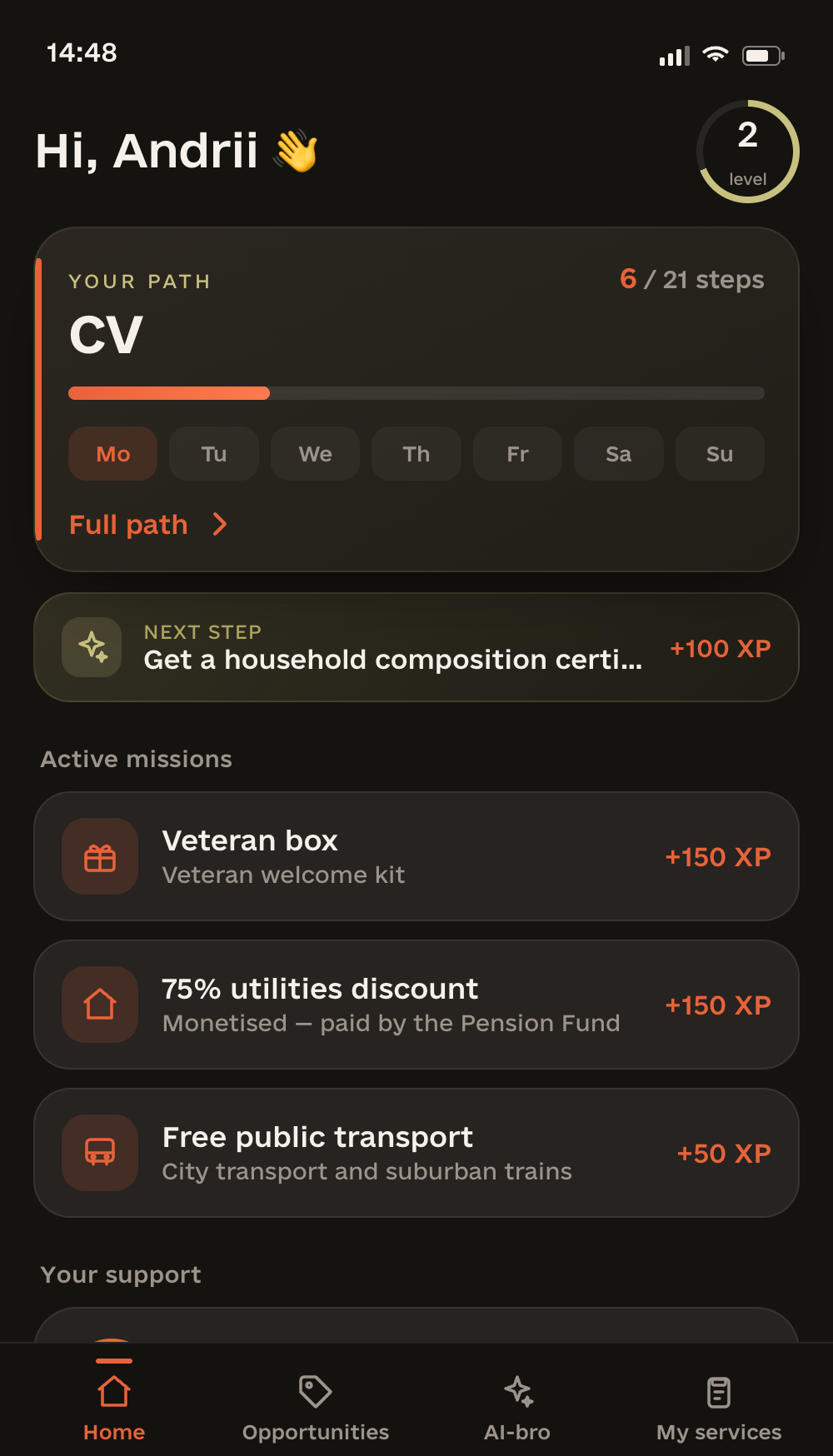
Рівень і XP, прогрес «6/21», наступний крок, активні місії та картка фахівця супроводу.
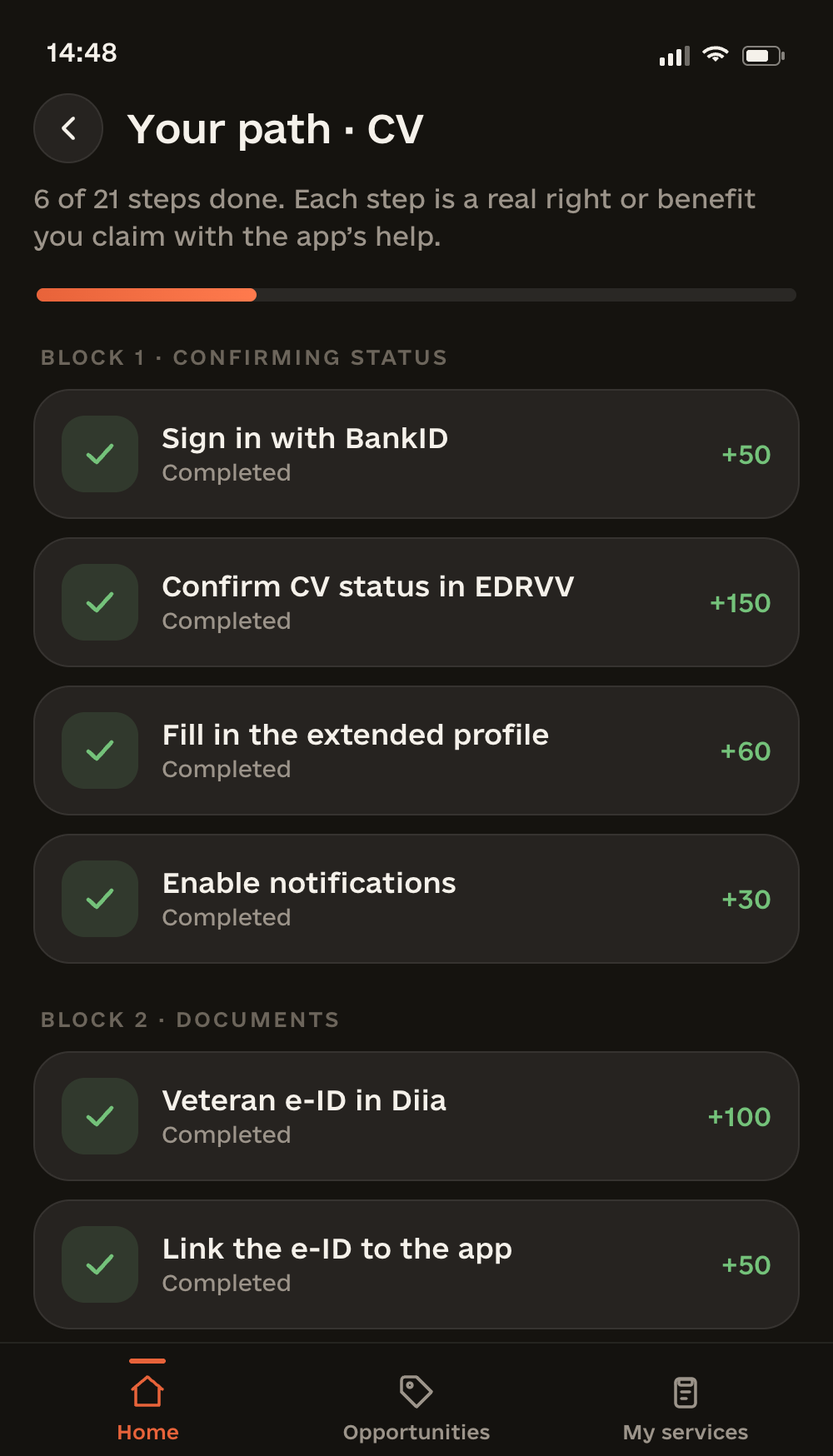
21 крок у 5 блоках: від підтвердження статусу через документи й пільги до власної справи.
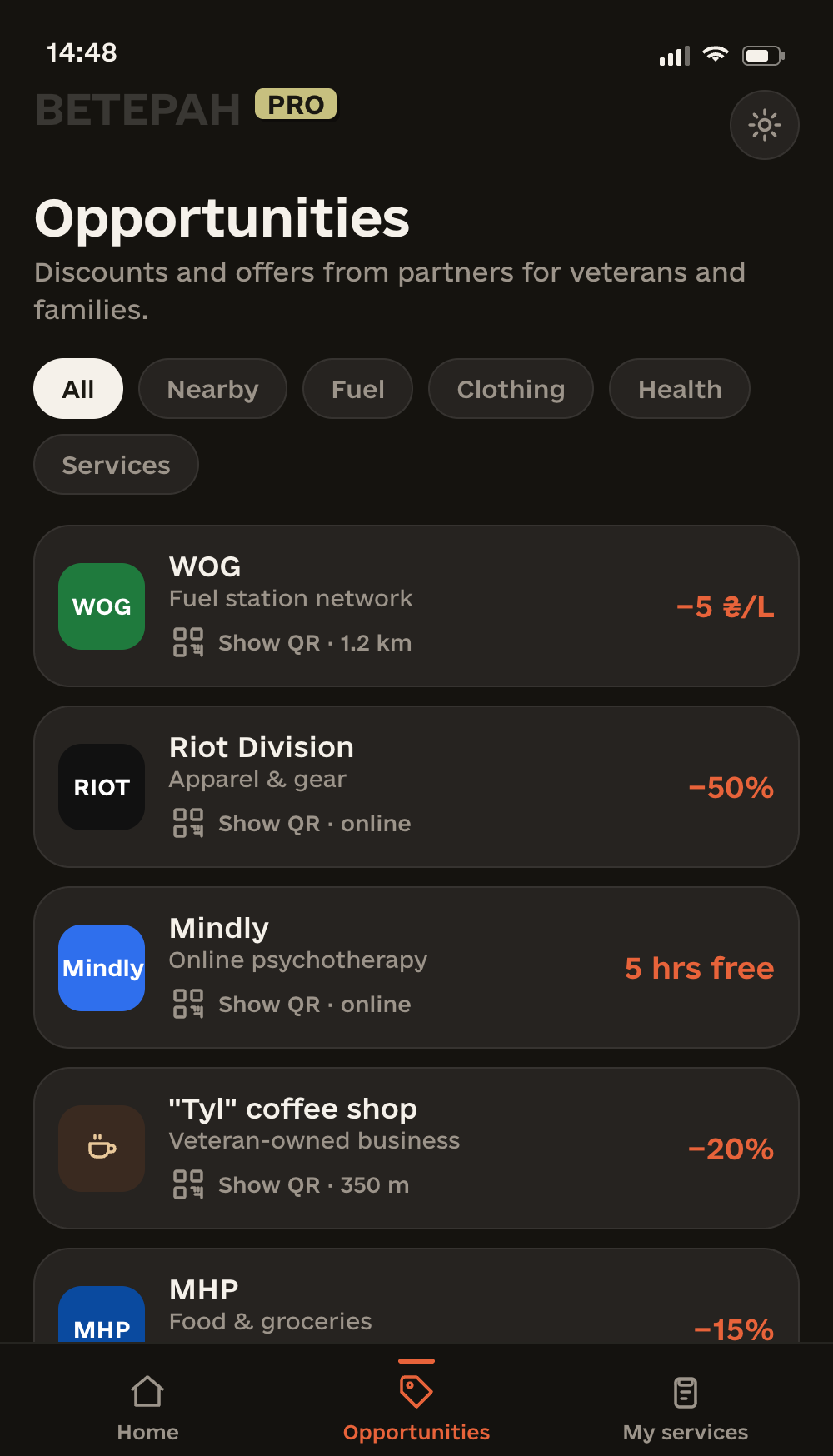
Знижки партнерів із фільтрами та QR на касі. Частина пропозицій відкривається з рівнем.
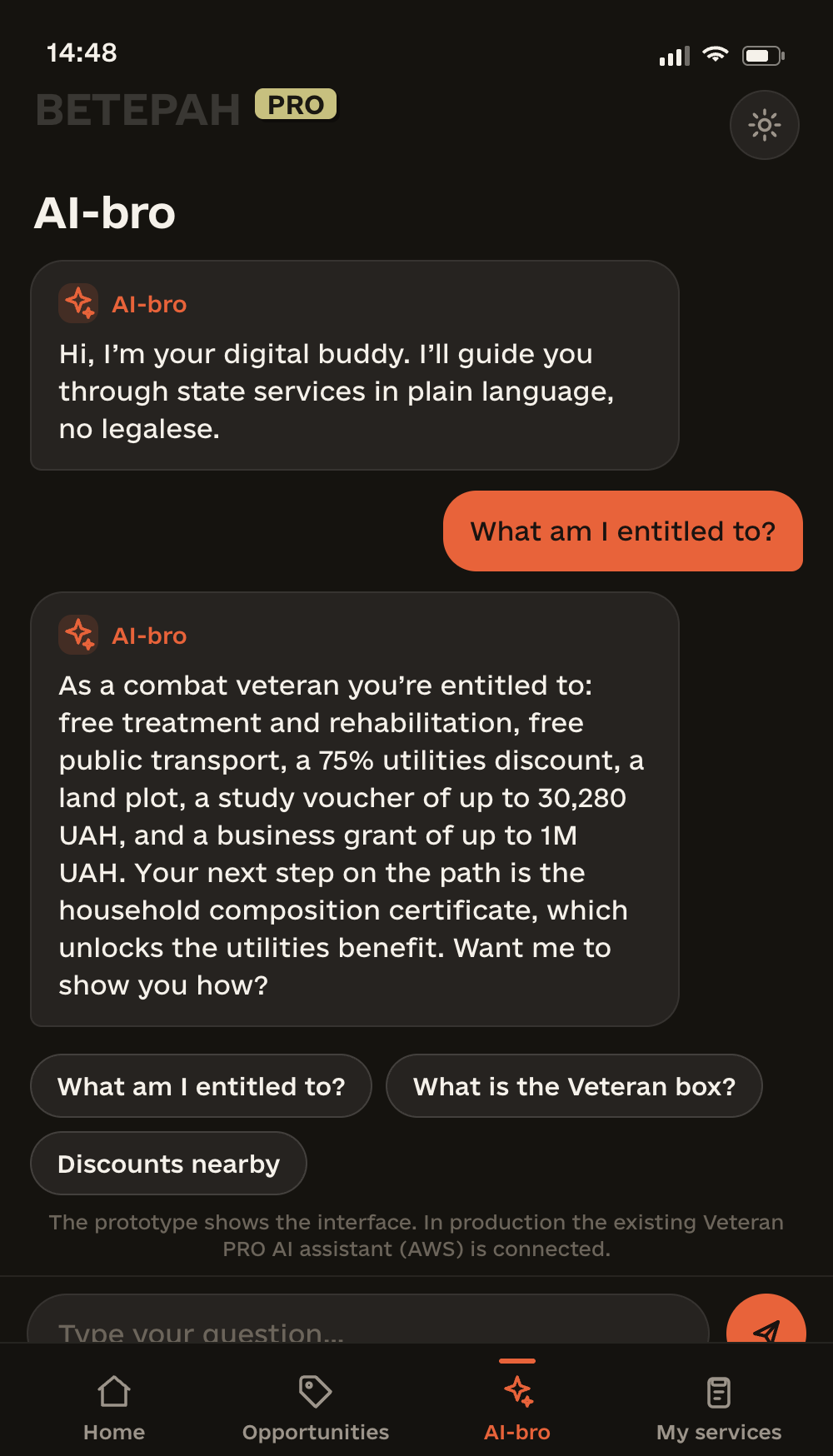
Помічник пояснює державні послуги простою мовою. У продакшені — наявний AI‑асистент Ветеран PRO (AWS).
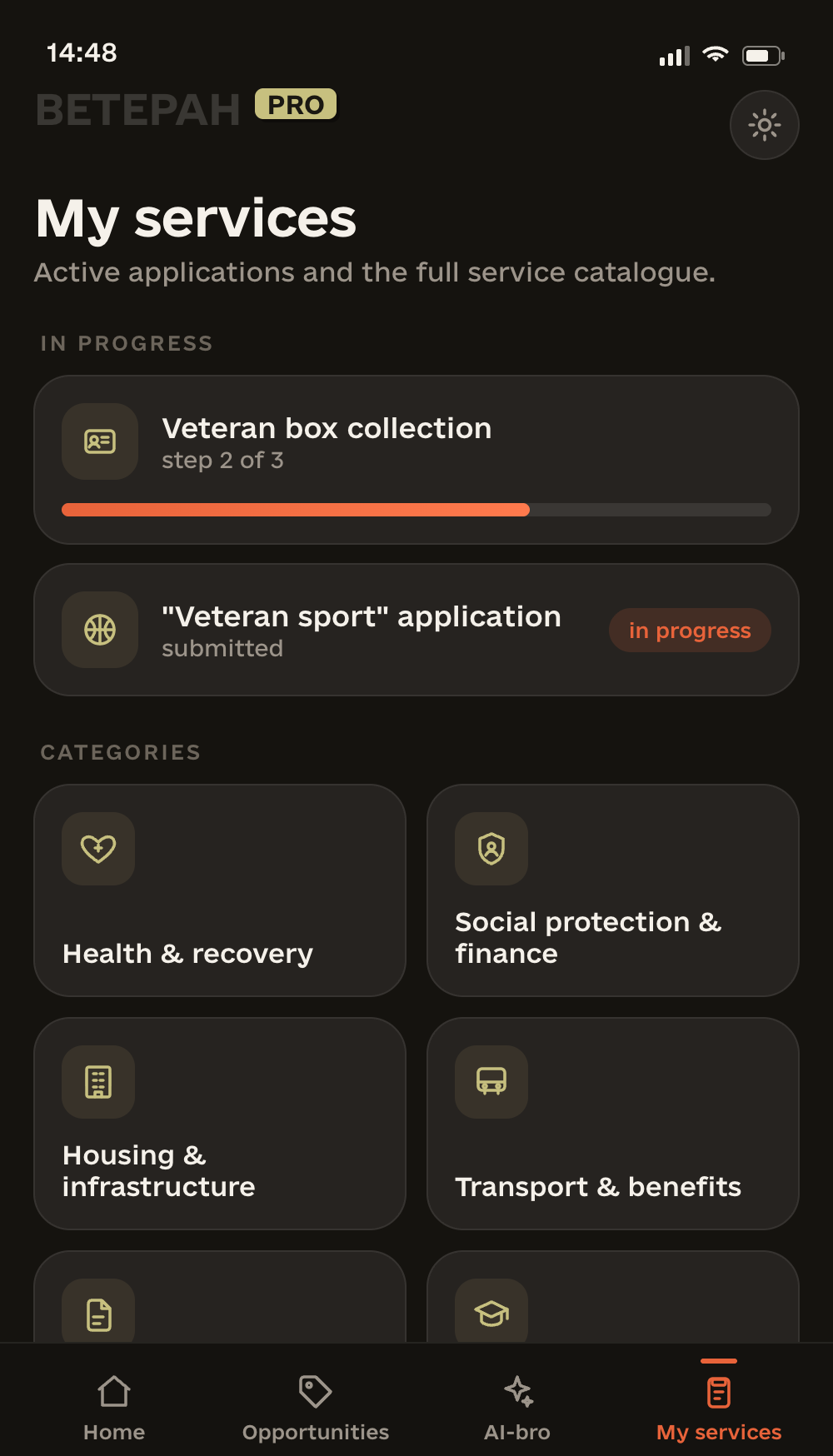
Каталог із 10 категорій і статуси заявок «у роботі». Дзеркало CRM — застосунок їх не створює.
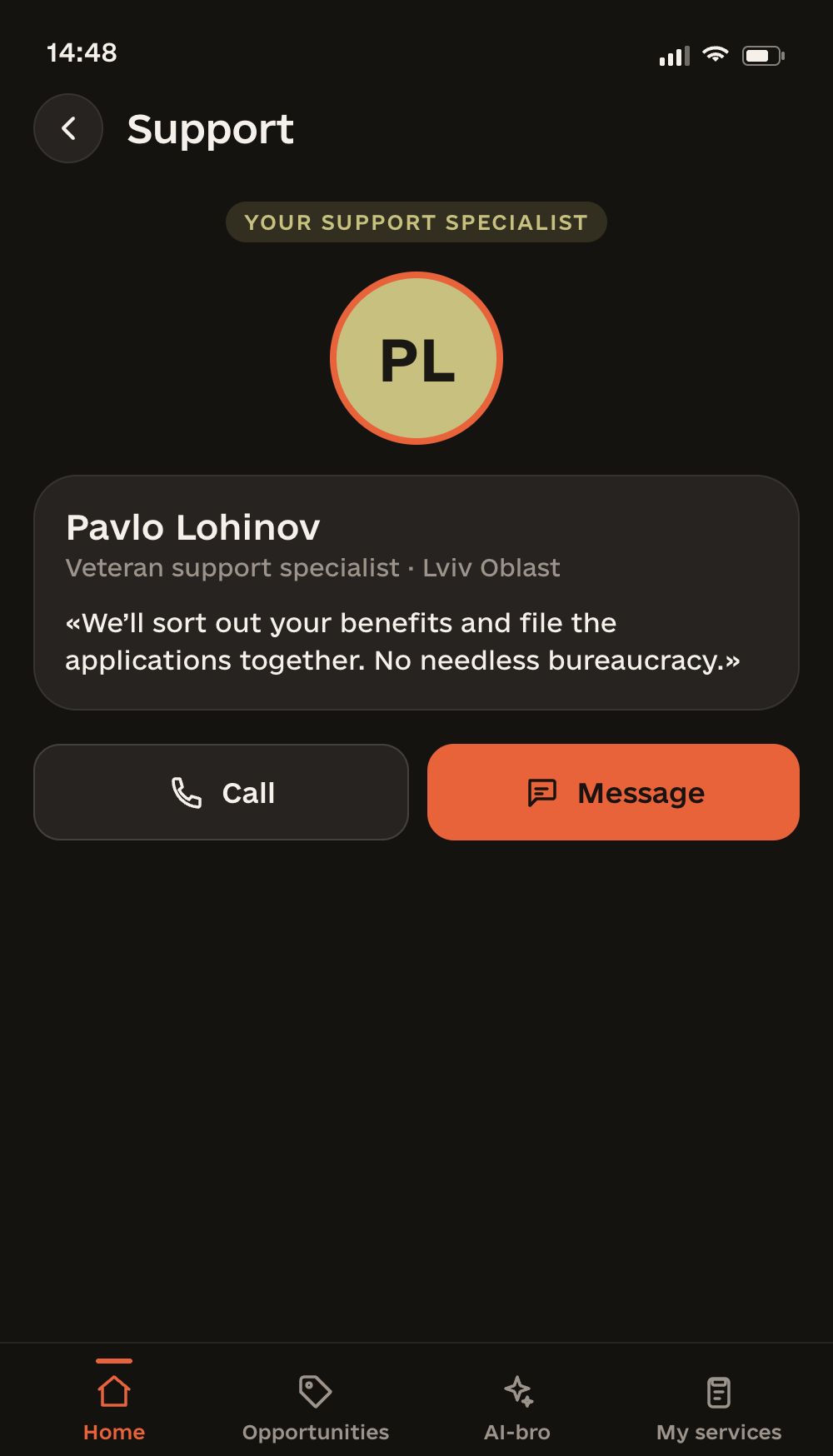
Реальна людина з CRM. Подзвонити або написати — без нової бюрократії в застосунку.
XP нараховуються за кроки, що дійсно змінюють життя: підтвердження статусу, оформлення пільги, запис на реабілітацію. Без «гача», без тиску — з повагою до дорослої аудиторії.
Підтвердив статус — +150. Оформив комуналку — +150. Перша знижка партнера — +75. Кожен крок прозоро пояснений.
Від «Новобранець у системі» до «Ветеран-амбасадор». Рівень відкриває ексклюзивні пропозиції — і ніколи не падає.
Рушій лояльності сам вирішує, кому й коли показати пропозицію. З частотними лімітами й тихими годинами — без спаму.
Партнери, акції, QR і сегментація налаштовуються поза застосунком. Те саме рішення підключається й до порталу, і до Дії.
Замовник просив зробити це так, як у великих маркетингових системах: рівень даних, лояльність і застосунок — окремі системи, які можна замінювати, не ламаючи решту. Один підрядник на всі частини знімає ризик довгих узгоджень API між командами.
Авторизація — через BankID НБУ напряму, обробляється в Mobile Backend (Django + DRF): OAuth-подібний потік, що повертає ПІБ, РНОКПП і телефон. id.gov.ua / Дія.ID не підходить — не віддає номер телефону. РНОКПП ізольований за внутрішнім subject_id, з аудит-логом.
JSON API на Django + DRF: зберігає статус застосунку та профіль, обробляє авторизацію BankID, збирає «наступний крок» і містить конфіг онбординг-опитувальника (змінюється без релізу).
Готового рішення немає. Починаємо з Apache Unomi (готовий opensource CDM) як найшвидший шлях до МВП — після R&D-етапу (1–2 тижні), що проганяє наш сценарій і зважує його проти кастому (Django/Python + PostgreSQL + Kafka). Якщо Unomi не вистачить — переходимо на кастом у Фазі 2.
Окремий сервіс, що знає все про пропозиції й нічого про ветерана (лише person_id у CDM). На нашому стеку — Django + Datastar: адмінка партнерів, акції, QR-погашення, сегментація на правилах, конфіг гейміфікації — усе налаштовується адміном, а не зашито в код.
Наявний бот на AWS підключається лише на рівні API — без власної AI-розробки. Так само, як він уже інтегрований у портал.
ЄДРВВ — через «Трембіту». Статуси заявок — дзеркало CRM фахівців (Odoo або ОСКАР — джерело узгоджується з клієнтом) лише на читання. Анонімізована аналітика — у SuperSet (друга фаза). Push — FCM та APNs.
Збір персональних даних із Реєстру та CRM працює лише після внесення системи в профіль безпеки (дедлайн ~10.08.2026) і отримання сертифіката BankID. До того ці дані в прототипі замоковані. Розгортання — у керованій інфраструктурі міністерства. Ми не заявляємо про резидентність даних понад те, що підтвердить юридична перевірка.
Аналоги окремих модулів в Україні є. Повної комбінації — офіційний маршрут + підтверджена особа + лояльність + супровід + AI — немає ні в кого.
Знижки й QR через Дію. Займає нішу лояльності, але без гейміфікації та проактивності.
МоборониМО: 504 млн грн зекономлено, 16 партнерів. Доводить, що модель «акція → QR → погашення» працює.
6 млн користувачів. Зразок «тонкого застосунку над реєстром» зі звичним входом.
Має е-посвідчення ветерана. Ми не змагаємось із Дією — будуємо окремий проактивний застосунок для форуму й комунікацій, яких Дія не дає.
Команда Фази 1 (орієнтовно): Solution Architect 0,3, PM 0,5, BA 0,5, Backend Lead (Django) 1, Backend (CDM) 1, Backend (Лояльність) 1, Mobile Lead 1, Mobile 1, DevOps 0,5, QA 1, Designer 0,5 ≈ 8 FTE. Бюджет МВП Фази 1 — індикативно $55–85k (нижня межа — Unomi «з коробки», верхня — кастомний CDM); фіксована ціна після R&D-етапу (CDM: Unomi vs кастом, 1–2 тижні, ≈ $6–10k окремо) і підпису скоупу.
Договір і сертифікат отримує міністерство (для держорганів — безкоштовно). Якщо не встигнуть — демо на тестовому середовищі.
Без нього дані ЄДРВВ і CRM лишаються замокованими. Строк тримається, обсяг звужується.
Створити завчасно, інакше ризик місяця модерації перед форумом.
Суми змінюються постановами КМУ. У проді тягнемо з керованого джерела, а не хардкодимо.
Повноцінний клікабельний прототип. Увійдіть через BankID, пройдіть онбординг, виконайте місію, відкрийте QR знижки.
Відкрити прототип